Wafer Scrubber and Cleaning System
Wafer scrubbing on the C&D P9000
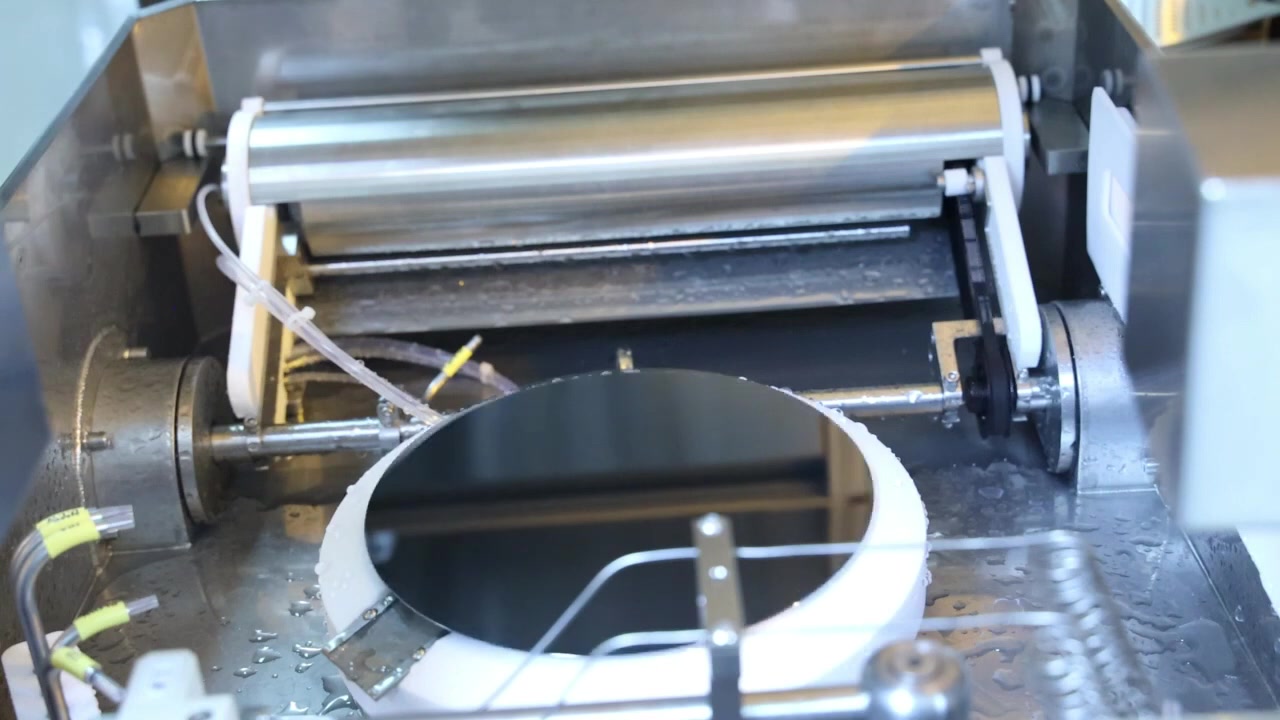
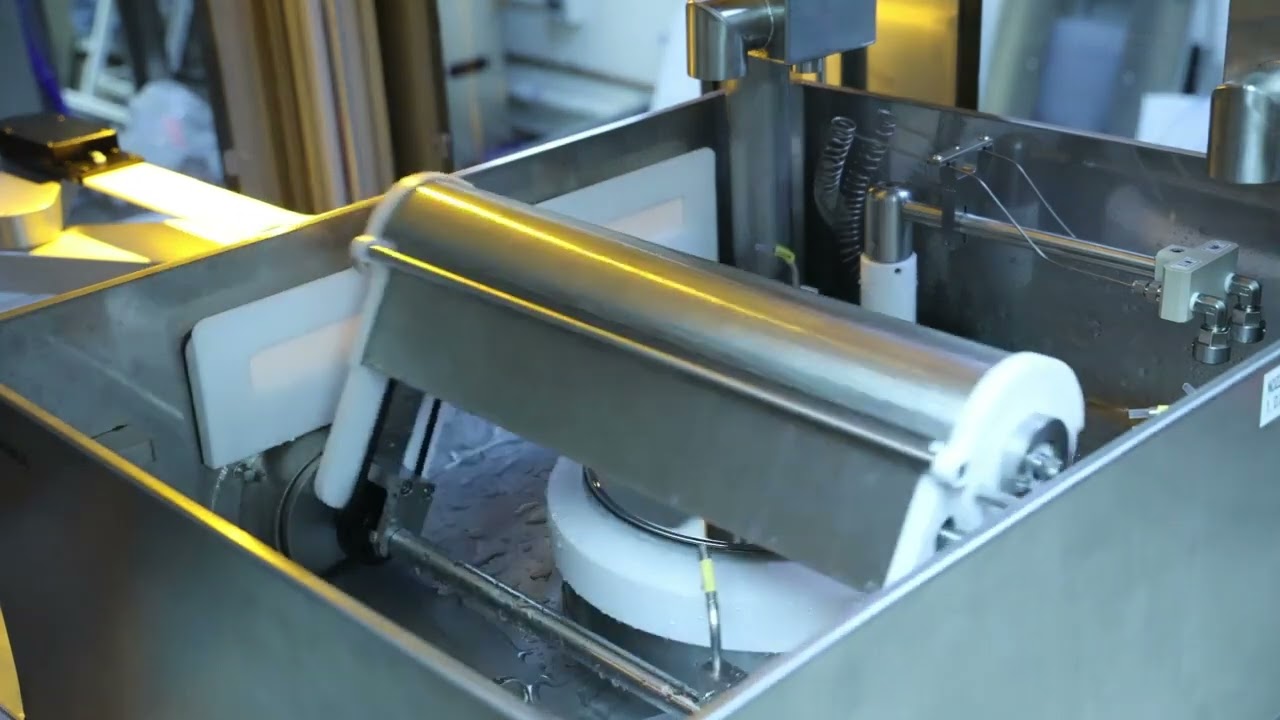
C&D’s cleaning module scrubs substrates with a roller brush and high-pressure spray, for particle and residue removal, resist strip and mask cleaning. On the P9000 cluster tool it runs with one to four scrubber modules and up to four indexers or FOUP load ports. It takes substrates from 100mm to 300mm, including silicon and glass wafers, quartz, carriers used in wafer thinning and 9″ x 9″ mask blanks. The robot only handles dry substrates.
SiSTEM is C&D’s distributor for the UK and Ireland: we specify and quote the system with you, and our after-sales team installs and supports it.
The cleaning module
- Five stream nozzles and a high-pressure spray at around 1,200 psi
- Roller brush with internal and external brush dispense, and a choice of brush types
- Two chemistries, with temperature-controlled dispense
- A raster scan function and Z-axis nozzle height to adjust the high-pressure spray
- A chamber that stops removed material redepositing on the back of the substrate
- An air ring chuck that keeps the back of the substrate dry
Cleaning after dicing
One process C&D has run cleans wafers after dicing with warm DI water above 50°C: a high-pressure spray at around 1,200 psi, a rinse and soak, then spin rinse dry.
Carrier cleaning for temporary bonding
When wafers are bonded to carriers for thinning and later separated, the carriers need cleaning before reuse. The scrubber cleans them on the same P9000 that coats the bonding material.
On the P8000
The single-side scrubber for the P8000 linear track takes 50mm to 150mm substrates, with programmable brush speed from 100 to 600 rpm and nozzle pressure from 1,400 to 5,000 psi. A low-pressure range of 400 to 1,400 psi is optional. The same module handles lift-off.
To quote a scrubber we’ll ask about
- Substrate type, size and thickness
- What you need to remove, and at which process step
- The chemistries you can use
- Throughput, and whether it joins an existing track