

- Benchtop bake plate for wafers up to 200 mm and squares up to 8” x 8”
- Ambient to 300°C, or 400°C as an option
- ±0.3% uniformity across the working surface
- Contact, vacuum or proximity baking
- Smart Pins set the proximity height under program control
- Cool-touch exhausted stainless steel hood
- Benchtop or flange mounting; fits the X-Pro II workstation
Wafer Hot Plates and Bake Plates
A bake plate, or wafer hot plate, heats a wafer or other substrate from below to dry and cure films such as photoresist on semiconductor wafers. SiSTEM supplies bake plates from Cost Effective Equipment, benchtop or flange-mounted into a wet deck, for research and low-volume production, and hotplate modules on C&D Semiconductor‘s coat and develop tracks for production fabs.
Bake plates against ovens
Hotplates replaced convection ovens for most film baking from the early 1980s. On a bake plate a silicon wafer reaches temperature in a few seconds, and a typical photoresist bake takes 60 to 90 seconds, where an oven process usually runs for thirty minutes or more. Each wafer is baked on its own, so it isn’t affected by colder wafers around it in a cassette, and it spends far less time exposed to particles in moving air. Heating from below also avoids the skin effect. In an oven the film surface heats first and seals over, trapping solvent that later forms blisters, a particular problem with thick films such as polyimides.
Where bakes fit in lithography
A resist-coated wafer usually sees the hotplate more than once. The soft bake, straight after coating, drives solvent out of the film so it doesn’t stick to the mask or change during exposure. A post-exposure bake follows exposure for chemically amplified resists and SU-8, where heat completes the reaction the light started. After development, a hard bake toughens the remaining resist before etching or plating. Each step has its own temperature and time, so a plate that holds programmed recipes and logs every run keeps them repeatable.
Bake methods
In a hard contact bake, vacuum holds the substrate flat against the plate for the best heat transfer, and it’s the usual choice for silicon. Soft contact relies on gravity alone and gives less uniformity. For a proximity bake, nitrogen or lift pins hold the substrate just above the surface. That warms it more gently, which helps with thick films, and it gives even heating on warped or cambered substrates that vacuum can’t hold flat. Proximity baking also keeps the plate off the back of the substrate, which is why photomasks are baked this way: direct contact can crack thick glass as it heats.
Setting temperature and time
The film ends up a little cooler than the plate surface, so hotplate temperatures run slightly higher than oven ones. With the plate at 115°C, photoresist on a silicon wafer settles at about 105°C within seconds. Thicker substrates such as photomasks and ceramic modules take longer to heat, and their bakes approach five minutes. Temperature and time trade against each other, but a bake that’s too short leaves part of the process to the handling before and after, where it’s hard to repeat.
Bake plates from CEE
The Apogee 200 bake plate takes substrates up to 200 mm round and 8″ x 8″ square, and the Apogee 300 bake plate takes wafers up to 300 mm and squares up to 12″. Both run from ambient to 300°C, or to 400°C as an option, with ±0.3% uniformity across the working surface. Smart Pins set the proximity gap under program control in 0.1 mm steps, and the plate sizes its vacuum zones automatically for each substrate. An exhausted stainless steel hood carries vapour away without drawing air across the wafer. DataStream logs the temperature of every run. Both come as benchtop units or for flange mounting into a wet deck, both fit CEE’s X-Pro II workstation beside a spin coater and developer, and both are CE marked.
Apogee bake plates are very popular with universities and research institutes across the UK and Europe, and with spin-out companies setting up their first lithography processes.
Bake plate options
Options for the Apogee bake plates include the 400°C heater and a nitrogen purge for an inert bake, and plastic-tipped lift pins are available too. For cooling between steps, CEE’s chill stations bring substrates back towards room temperature, either mounted on the hood or as one- or five-tier units.
HMDS vapour prime bake plates
Photoresist often needs an adhesion promoter on the wafer first, and HMDS is the usual choice. CEE’s Apogee HMDS bake plate primes the substrate with HMDS vapour inside a sealed vacuum chamber on the hotplate. A recipe runs a nitrogen pre-purge, the HMDS vapour prime and a nitrogen post-purge, with the HMDS fed from a bubbler canister that warns when it runs low. It takes substrates up to 200 mm round and 5″ x 5″ square, bakes from ambient to 150°C, and can hold the substrate at up to ten programmed proximity heights.
Hotplates on C&D tracks
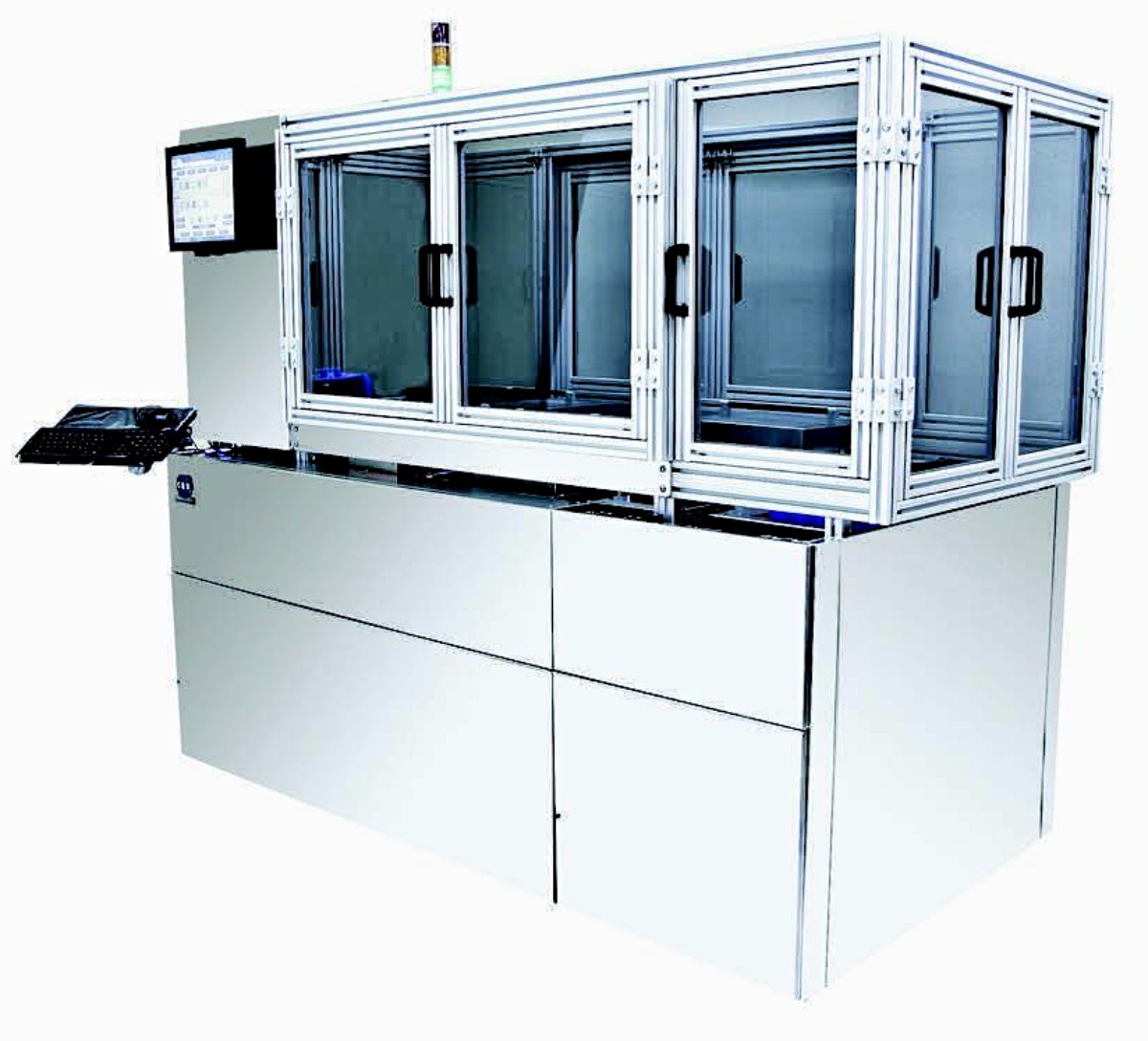
The C&D P9000 cluster system stacks hotplate, vapour prime and chill plate modules alongside its coaters and developers, for substrates from 50 mm to 300 mm. Its hotplates run from ambient to 300°C, the vapour prime module from 25°C to 190°C with proximity bake, and the chill plate brings wafers back towards room temperature before the next step. The C&D P8000 advanced linear track can also carry bake and cooling modules for 50 mm to 200 mm substrates.
What a bake plate costs
Price depends mostly on substrate size and temperature range, and on how the plate is mounted. Larger or unusual substrates are possible too. CEE’s engineers review each one from drawings and photos of the part, usually on a call with us, before quoting. Each system is quoted individually, so tell us your substrates and bake temperatures and we’ll put a figure together.
Bake plate questions
Can an Apogee bake plate go in a glove box?
Yes. CEE confirm that all their tools are glove box compatible. Tell us the glove box make and model when you ask for a quote.
What facilities does it need?
A vacuum supply of 20 inHg (33 kPa absolute) and a 2″ exhaust connection, plus nitrogen at 35 psi (241 kPa) for proximity baking. The Apogee 200 runs on 100-125 or 208-230 VAC, and the Apogee 300 on 208-230 VAC at up to 16.3 A.
Can it bake photomasks and square substrates?
Yes. The Apogee 200 takes squares up to 8″ x 8″ and the Apogee 300 up to 12″. Photomasks are usually baked in proximity, on nitrogen or lift pins, so the plate never touches the back of the glass.
Buying through SiSTEM
SiSTEM quotes and supplies CEE and C&D equipment across the UK and Europe and handles the warranty in territory. If a tool goes down, we stay on the fault with the manufacturer until you confirm it’s working properly again. Get a quote, or contact us to talk through your process. Spin coaters and spin developers for the same wafer processing line are on the neighbouring pages.
Bake Plates
-
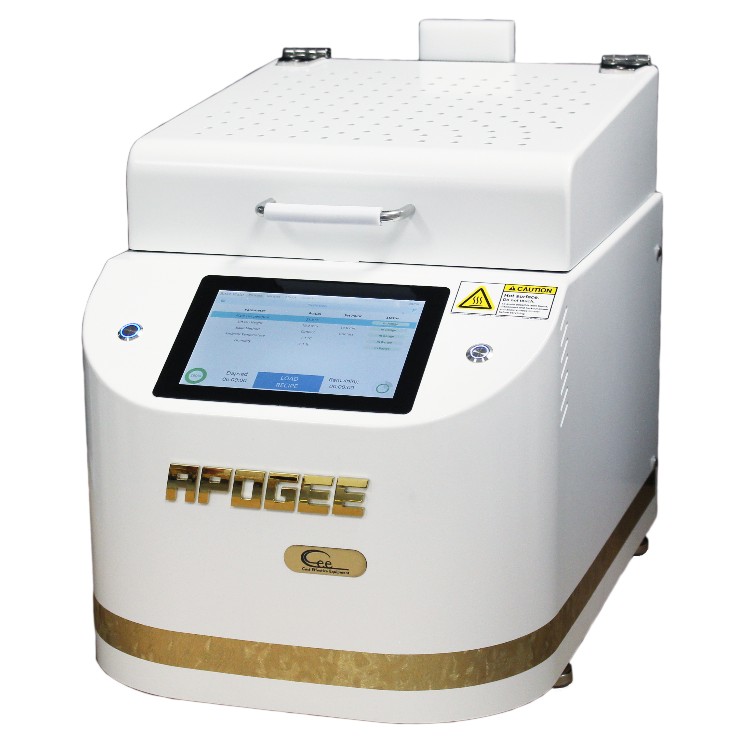
Apogee 200 Bake Plate
-
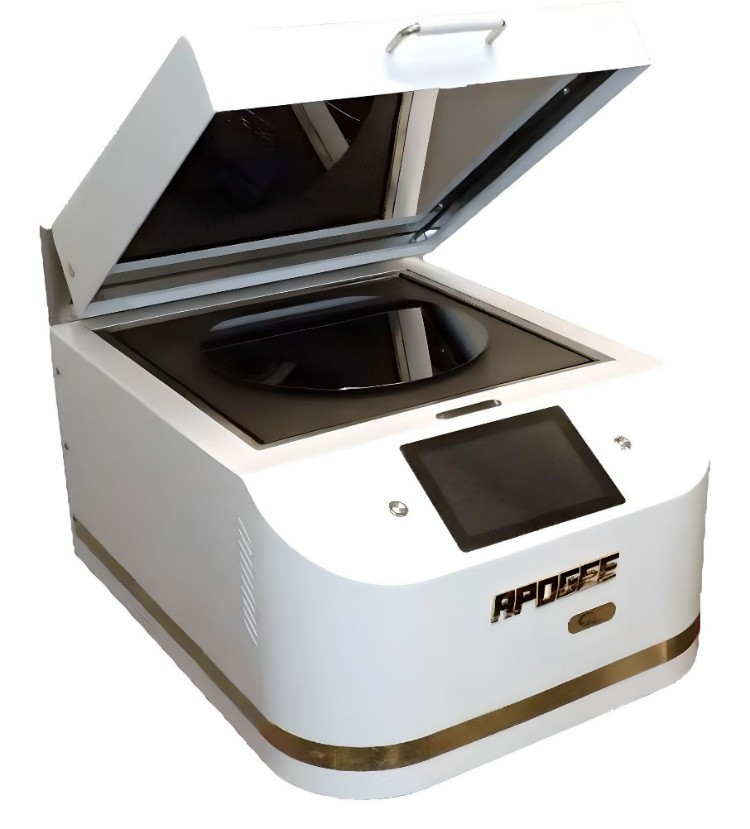
Apogee 300 Bake Plate
- Bake plate for wafers up to 300 mm and squares up to 12”
- Ambient to 300°C, or 400°C as an option
- ±0.3% uniformity across the working surface
- Contact, vacuum or proximity baking
- Smart Pins set the proximity height under program control
- Cool-touch exhausted stainless steel hood
- Benchtop, flange or deck mounting; fits the X-Pro II workstation
-
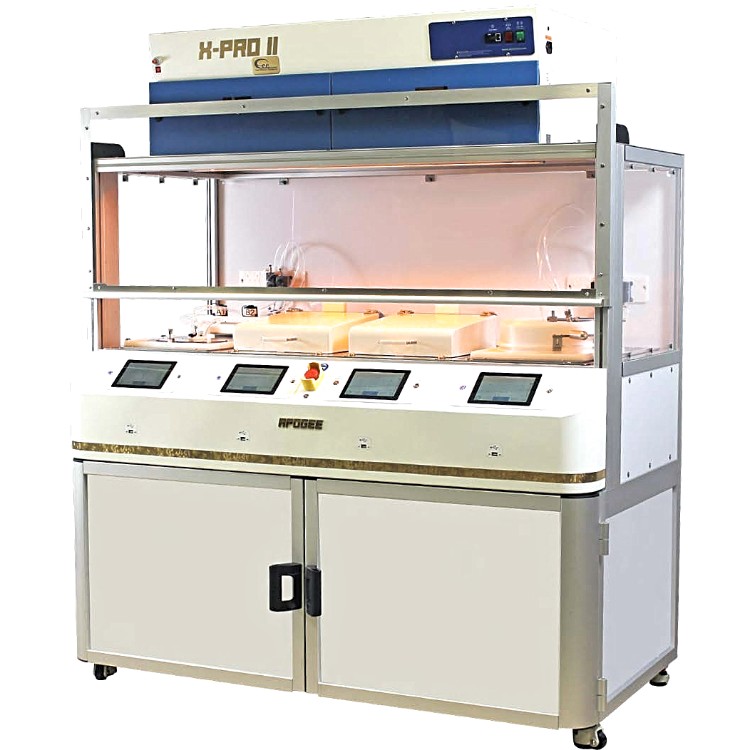
X-Pro II Workstation
- Full-size or half-size cabinet for coat, develop and bake modules
- Choice of ducted exhaust, fan filter unit (laminar downflow) or ductless recirculation top
- Installation and training arranged and quoted, delivered by our UK and European after-sales team
- Waste bottle containment with optional drain bottles
- Exhausted drawer for material storage and pressure vessels
- Sash for a clean environment, fume containment and operator safety
- CE marked
-
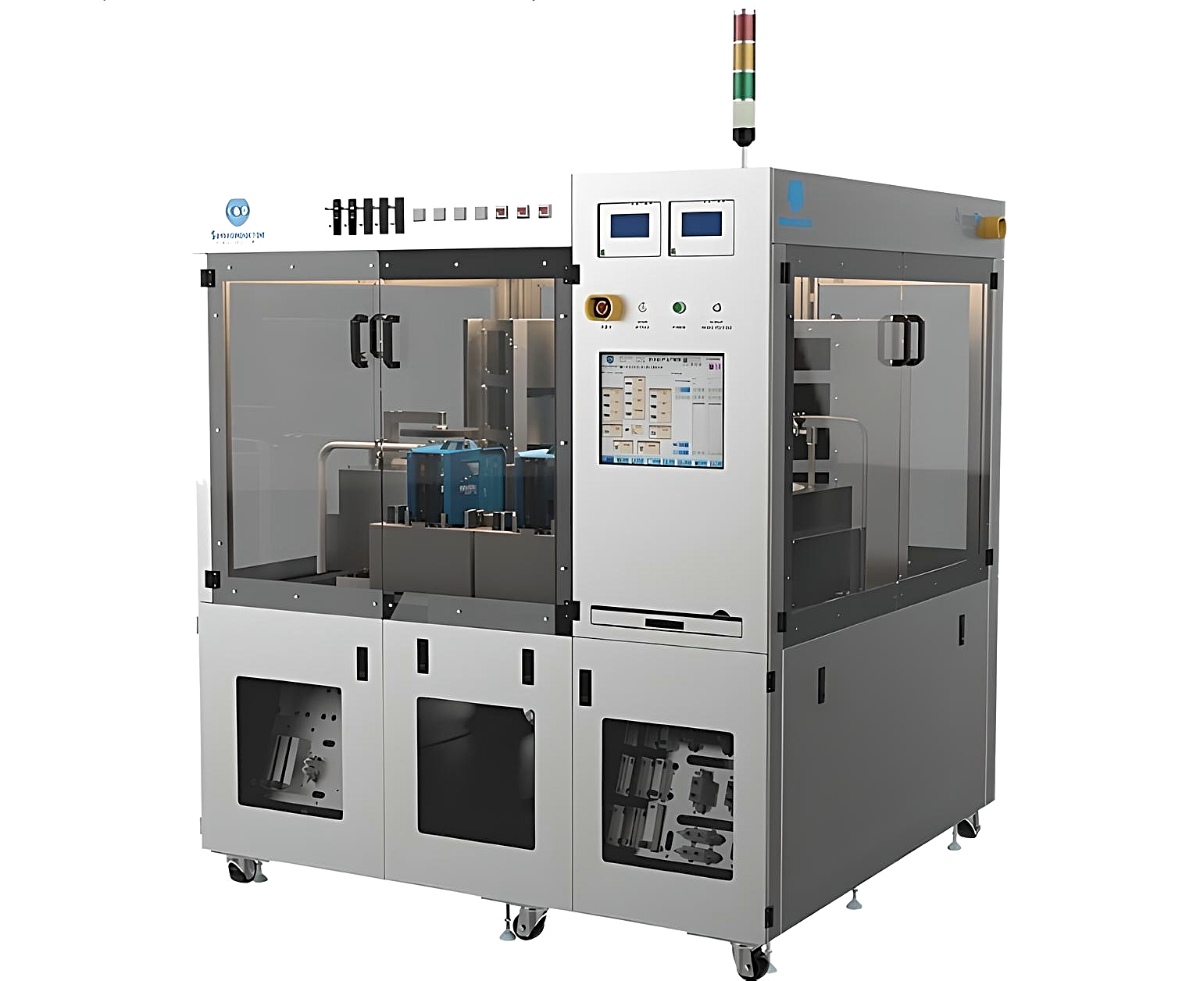
P9000 Coat and Develop Cluster Tool
- Coat, develop, bake, prime and chill modules in any mix
- 50mm to 300mm wafers, up to three sizes without hardware change
- Spray coating, metal lift-off, alloy and optical EBR options
- Built in San Jose, supplied and supported by SiSTEM
-
P8000 Linear Coat and Develop Track
- Linear coat and develop track for 50mm to 200mm wafers
- Coater, developer, hot plate, chill, vapour prime and scrubber modules
- Built new, with obsolete parts designed out
- Built in San Jose, supplied and supported by SiSTEM