
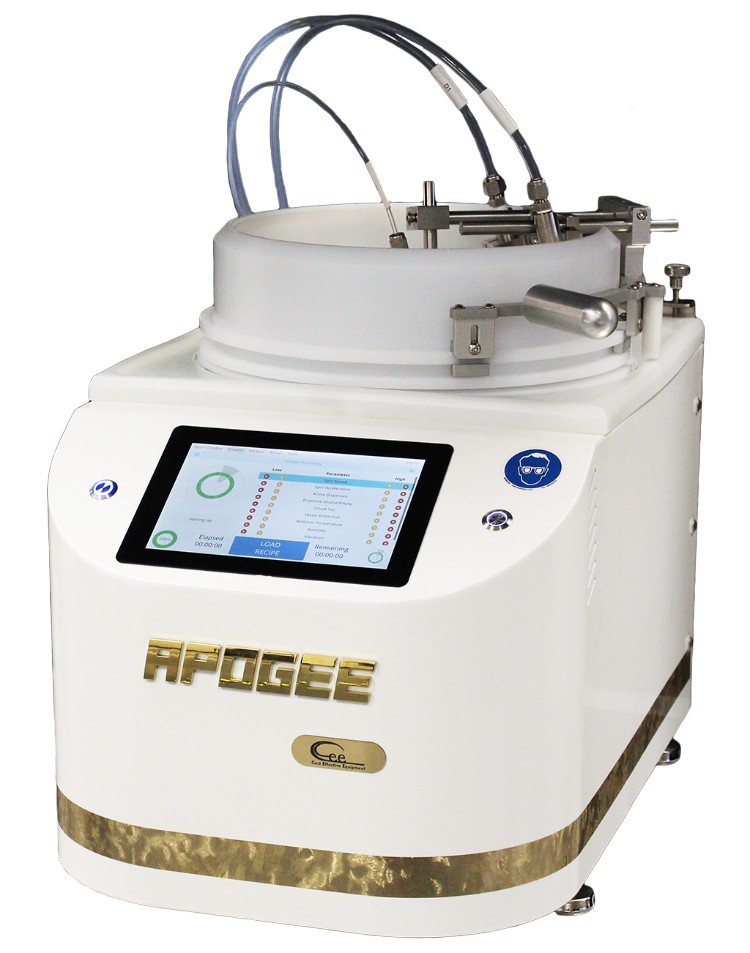
- Benchtop spin developer for wafers up to 200 mm and squares up to 6” x 6”
- Spray or stream developer dispense
- Top and backside DI water rinse
- Spin speed up to 12,000 rpm
- Optional nitrogen blow-off
- Fits the X-Pro II workstation
Spin Developers for Photoresist Processing
A spin developer brings out the pattern in exposed photoresist by applying developer to a spinning substrate, then rinsing and drying it. SiSTEM supplies spin developers from Cost Effective Equipment, benchtop or flange-mounted into a wet deck, and automated coat and develop tracks from C&D Semiconductor.
How spin developing works
The substrate is held on a spin chuck, most often by vacuum, and developer goes on by spray, stream or puddle. In a puddle process the developer rests on the wafer for a set time before it’s spun off. A DI water rinse on the top and back stops development, and the substrate then spins dry, sometimes helped by a nitrogen blow-off. Development time and temperature decide how closely the finished features match the mask, so repeatable dispense and spin control matter as much as they do in coating. Spin developers are part of every lithography line for semiconductor devices, MEMS, solar cells and biosensors.
Aqueous and solvent developers
Most positive resists develop in an aqueous alkaline developer, typically TMAH based, while many negative resists, SU-8 among them, use a solvent developer. If one tool runs both, the two waste streams have to be kept apart. CEE’s auto-drain separator sends solvent and aqueous waste down separate paths, and each developer can have its own dispense line.
Choosing a spin developer
Start with the dispense method your process needs and the number of developer solutions you run. A backside rinse, or separate paths for solvent and aqueous waste, may also be on the list. Substrate size and weight set the bowl and the drive, as they do for a spin coater. Decide too where the tool will sit, since a spin developer can stand on the bench or be flange-mounted into a wet deck. Volume is the last question. A developer with manual loading suits research and small batches, and a track loads cassettes and develops wafers straight after post-exposure bake without an operator in between.
Spin developers from CEE, benchtop or flange-mounted
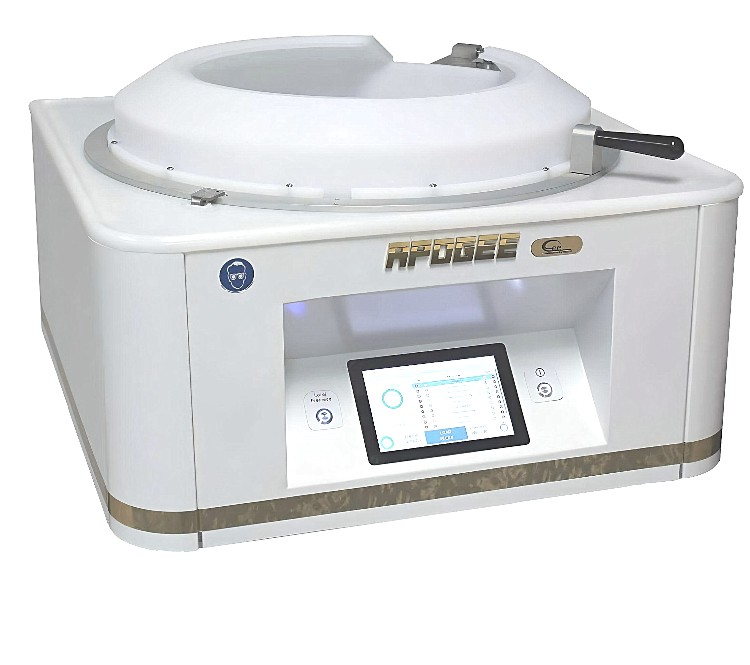
The Apogee 200 spin developer takes wafers up to 200 mm and squares up to 6″ x 6″ at up to 12,000 rpm. The Apogee 450 spin developer handles wafers up to 450 mm and LCD or photomask squares up to 14″ x 14″. Both feed up to four spray or stream nozzles from pressure cans, with top and backside DI rinse and an optional nitrogen blow-off. A drain separator can divert waste through separate paths, and DataStream logs every run. The motor sits outside the chemical path on an indirect drive. Both come as benchtop units or for flange mounting into a wet deck, both fit CEE’s X-Pro II workstation beside a spin coater and bake plate, and both are CE marked.
SiSTEM has supplied Apogee spin developers to companies throughout the UK and Europe since 2020, some as benchtop tools and others in X-Pro II workstations.
Developer modules on C&D tracks
The C&D P9000 cluster system can be configured with developer modules alongside its coaters and bake plates, processing substrates from 50 mm to 300 mm. Each developer module takes up to four developer solutions through a programmable dispense arm, with a low-impact DI rinse stream and optional DI spray, and spins at 10 to 8,000 rpm. The C&D P8000 advanced linear track coats and develops 50 mm to 200 mm substrates, and it can also replace the control system on an existing SVG 8x track.
What a spin developer costs
Price depends mostly on substrate size and the number of dispense lines. A benchtop Apogee with a single developer sits at the lower end, and a configured production track at the other. Larger or unusual substrates are possible too. CEE’s engineers review each one from drawings and photos of the part, usually on a call with us, before quoting. Each system is quoted individually, so tell us your substrates and developer chemistry and we’ll put a figure together.
Spin developer questions
Can an Apogee spin developer go in a glove box?
Yes. CEE confirm that all their tools are glove box compatible. Tell us the glove box make and model when you ask for a quote.
What facilities does it need?
A vacuum supply below 33 kPa absolute, plus drain and exhaust connections. Automated dispense needs nitrogen or clean dry air at 70 psi (482 kPa). The Apogee 200 runs on 100-120 or 208-230 VAC, and the Apogee 450 on 208-230 VAC.
Which chemicals can it handle?
The standard spin bowl is high-density polyethylene. Custom bowls, such as PTFE (Teflon), are available where the chemistry calls for them. Send us your developer and rinse chemistry and we’ll confirm compatibility with CEE before quoting.
Can I run a coater and developer side by side?
Yes. Both fit CEE’s X-Pro II workstation beside a bake plate, in one exhausted enclosure.
Buying through SiSTEM
SiSTEM quotes and supplies CEE and C&D equipment across the UK and Europe and handles the warranty in territory. If a tool goes down, we stay on the fault with the manufacturer until you confirm it’s working properly again. Get a quote, or contact us to talk through your process. Spin coaters and bake plates for the same wafer processing line are on the neighbouring pages.
Spin Developers
-
Apogee 200 Spin Developer
-
Apogee 450 Spin Developer
- Benchtop spin developer for wafers up to 450 mm and squares up to 14” x 14”
- Fanjet spray, side-angle puddle and stream dispense
- Up to four spray or stream nozzles
- Optional auto-drain separator
- Benchtop, flange or deck mounting
- Fits the X-Pro II workstation
-
X-Pro II Workstation
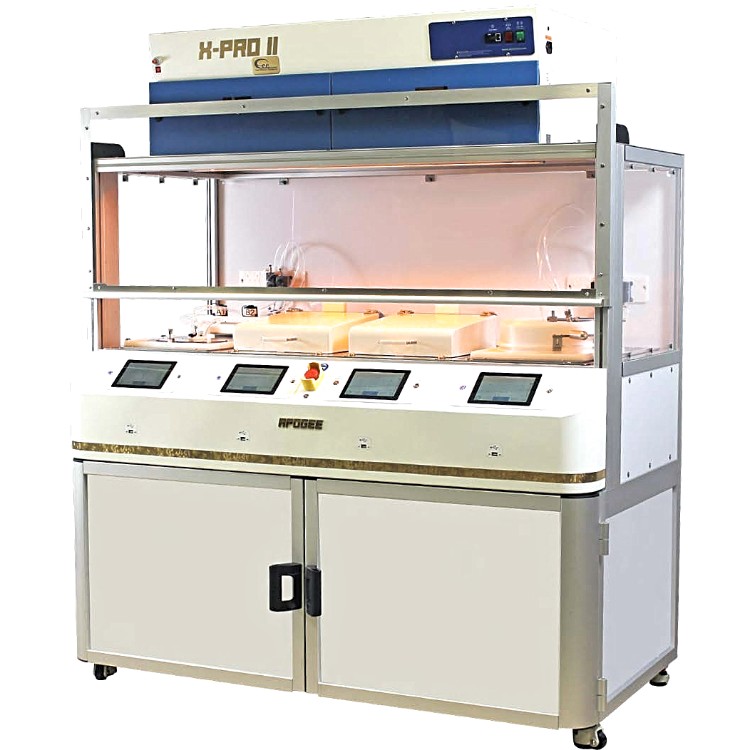
- Full-size or half-size cabinet for coat, develop and bake modules
- Choice of ducted exhaust, fan filter unit (laminar downflow) or ductless recirculation top
- Installation and training arranged and quoted, delivered by our UK and European after-sales team
- Waste bottle containment with optional drain bottles
- Exhausted drawer for material storage and pressure vessels
- Sash for a clean environment, fume containment and operator safety
- CE marked
-
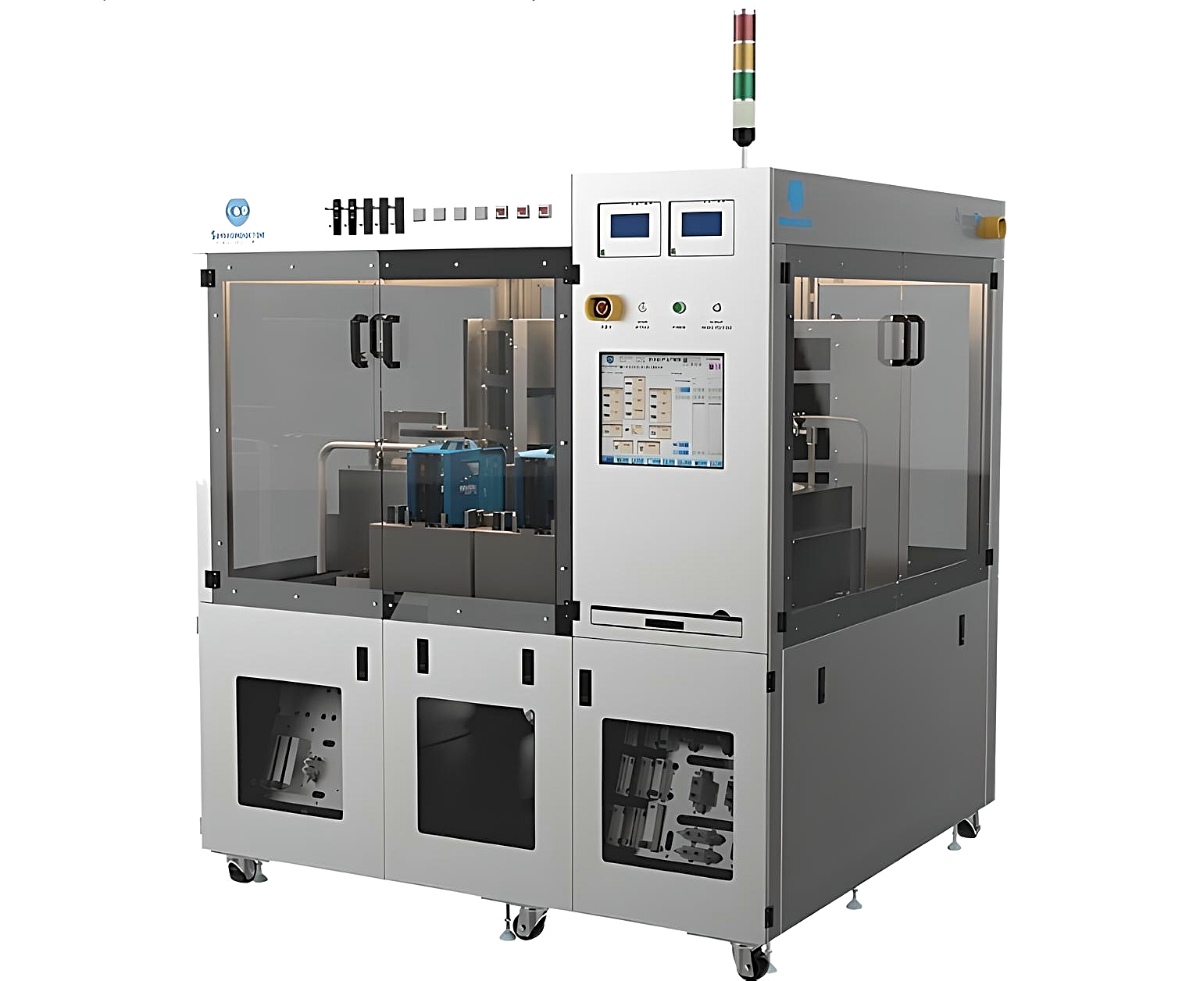
P9000 Coat and Develop Cluster Tool
- Coat, develop, bake, prime and chill modules in any mix
- 50mm to 300mm wafers, up to three sizes without hardware change
- Spray coating, metal lift-off, alloy and optical EBR options
- Built in San Jose, supplied and supported by SiSTEM
-
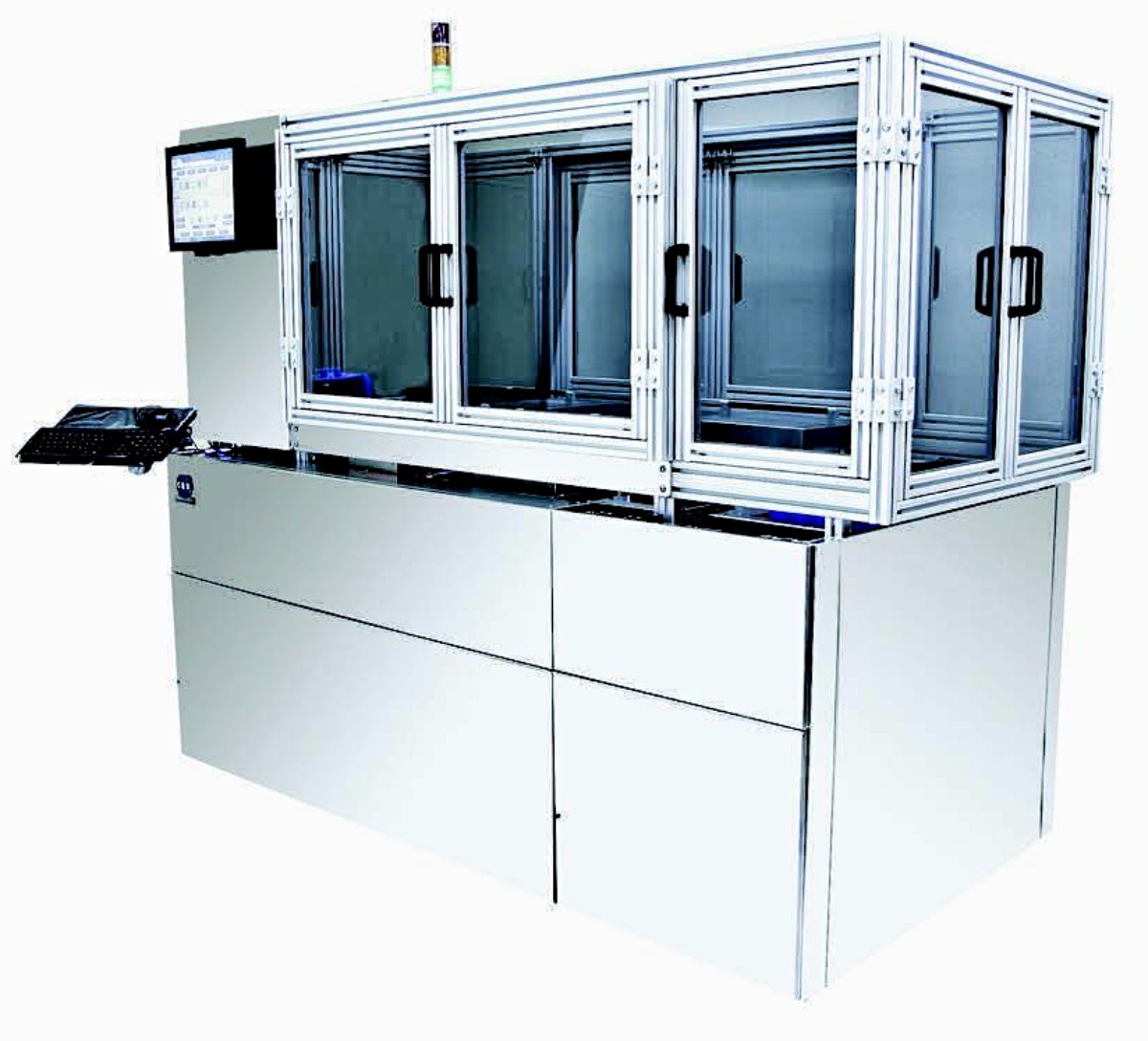
P8000 Linear Coat and Develop Track
- Linear coat and develop track for 50mm to 200mm wafers
- Coater, developer, hot plate, chill, vapour prime and scrubber modules
- Built new, with obsolete parts designed out
- Built in San Jose, supplied and supported by SiSTEM