

- Manual, semi-automated or fully automated
- FM4910 for acids and bases, stainless steel for solvents
- Built and tested in San Jose, California
- Installed and serviced by SiSTEM in the UK and Europe
Semiconductor Wet Benches
A semiconductor wet bench is a workstation where wafers are cleaned, etched, rinsed and dried in liquid chemistry, with every tank’s temperature and flow under control. SiSTEM supplies Modutek wet benches across the UK and Europe, from a manual process station in a university cleanroom to a fully automated line in production, and installs and services them here.
What a wet bench does
Most front-end wafer processes in semiconductor and MEMS manufacturing start or finish in liquid. A wet bench runs the RCA clean (SC1 and SC2), buffered oxide etch, KOH etching of silicon, hot phosphoric acid nitride etch, SPM cleaning, photoresist development, solvent cleaning and plating. Each chemistry has its own tank, heated or at room temperature, with recirculation and filtration where the process needs it. Between chemical steps the wafers are rinsed in DI water, often in a quick dump rinser, and dried before they move on. Hot DI water and many process chemistries are heated inline, and our inline DI water and chemical heaters page covers the Process Technology heaters we supply for benches.
The bench holds all of this in one exhausted cabinet. Chemistry stays contained, fumes are drawn off at the tank lip, and the operator works behind safety shields with an emergency power off within reach.
Manual to fully automated benches
Manual process stations. The operator moves cassettes from tank to tank by hand. Modutek’s manual stations come with an emergency power off and full safety interlocks, lip exhaust on every tank, a nitrogen purge, PVC safety shields, a DI water hand spray and a one-year parts warranty, and they are wired to NFPA 70 and 79. They suit prototype development and research cleanrooms, and they can be built to any length the process needs.
Semi-automated benches. Robotics move the wafers between baths on servo motors with encoder feedback, while the operator keeps direct control of the process chemistry and timing through a PLC touchscreen. A semi-automated bench takes the manual handling out of a process without committing it to a fixed recipe.
Fully automated benches. Recipes are programmed per application, and Modutek writes its robotics and control software in-house. Options include data logging and resistivity monitoring. A dry-to-dry configuration is also available, where wafers go into the bench dry and come out dry. Automated benches handle standard wafer carriers and can be configured for glass substrates and large-format panels.
Materials and chemistry
The construction follows the chemistry. Modutek builds acid and base benches in FM4910, a fire-rated polypropylene, and solvent benches in stainless steel. PVDF and Teflon are used where purity matters, and all-Teflon plumbing is an option. Quartz tanks cover high-temperature baths. Each tank is specified around its own chemistry and cassette size, so one bench can carry several processes side by side.
Megasonic cleaning and silicon carbide
Megasonic cleaning works at 850 kHz to 2 MHz, well above the 20 to 200 kHz of industrial ultrasonic cleaning. At those frequencies cavitation is smaller and gentler, and acoustic streaming carries particles away from the wafer surface. Run with SC1 or dilute alkaline chemistry, it can remove sub-micron particles and post-CMP residue with a lower risk of damaging patterned features.
That matters on silicon carbide. The substrate is hard, but the device layers built on it, such as gate oxides and epitaxial layers, are not, and silicon recipes don’t transfer directly. Modutek’s guidance is to characterise SiC cleaning separately, starting at conservative power density and short exposure, and to confirm the result with defect inspection and electrical testing. Megasonic tanks fit any of the three bench types.
Cleanroom and facility options
Fan filter units with HEPA filtration, rear maintenance access, an integrated lift station, dedicated drains to carboys with containment, a three-colour light tower, counterbalanced safety shields and seismic zone 4 structural certification are all available. Every Modutek bench is checked with DI water before delivery, and factory acceptance testing can be arranged.
Lithography: the CEE X-Pro II
For lithography, CEE’s X-Pro II puts Apogee spin coaters, bake plates and spin developers into one integrated wet bench workstation. It is configured around the process and built in full and half widths. SiSTEM supplies it across the UK and Europe alongside the Modutek range.
Wet bench questions
What is a semiconductor wet bench?
A workstation for the liquid steps of wafer processing: cleaning, etching, rinsing, drying and photoresist development. It holds the process tanks, plumbing, exhaust and safety interlocks in one cabinet.
What’s the difference between a manual and an automated wet bench?
On a manual station the operator moves wafers between tanks by hand. A semi-automated bench moves them robotically while the operator controls the process, and a fully automated bench runs programmed recipes from start to finish.
Can one wet bench run different chemistries and tank sizes?
Yes, within limits set by the materials. Each tank is specified for its own chemistry and cassette size. Acids and bases run on FM4910 construction and solvents on stainless steel.
Are there wet bench suppliers who work on compound semiconductors?
Modutek builds benches for silicon and for compound semiconductor processes, including megasonic cleaning for silicon carbide. Tell us your materials and we’ll check the process with Modutek.
How is a wet bench tested before it is installed?
Modutek checks every bench with DI water before delivery, and factory acceptance testing against your specification can be arranged before shipment. SiSTEM then installs and commissions it on site.
What should a wet bench specification include?
Substrate types and sizes, construction material, laminar flow or fume hood design, the level of automation, and for each tank the chemical, temperature, recirculation and filtration. Add exhaust, voltage, maintenance access and the space available. Our quotation questionnaire covers all of it.
What support is there after installation?
SiSTEM installs and services Modutek benches across the UK and Europe. Modutek adds post-warranty support, preventive maintenance programmes, remote diagnostics and operator training.
Buying through SiSTEM
SiSTEM is Modutek’s distributor for the UK and Europe. We scope your wet bench with you and Modutek’s engineers and quote and supply it from SiSTEM. From first discussion through to handover we look after the project, with installation and after-sales from our UK and European team. If a bench goes down, we stay on the fault with Modutek until you confirm it’s working properly again. Get a quote, or send us your process and chemistry to talk it through.
Wet Bench Products
-
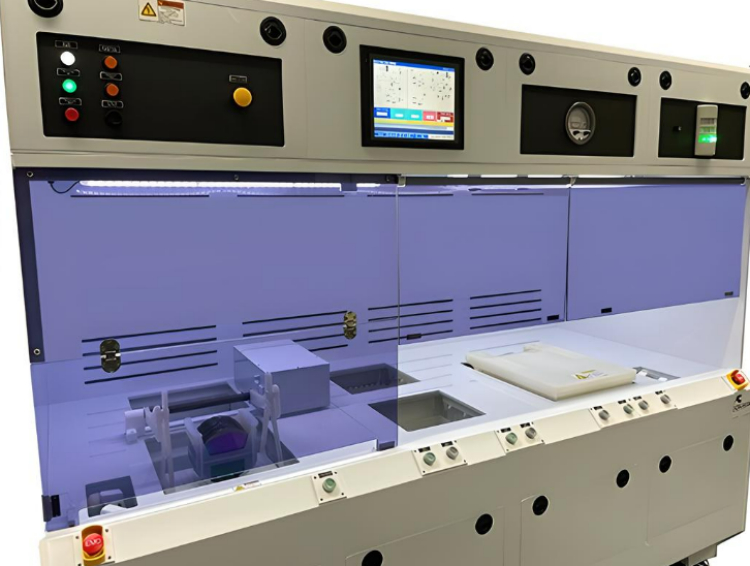
Custom Wet Benches and Wet Process Stations
-

Stainless Steel Solvent Wet Benches
- 304 stainless steel with integrated fire suppression
- Heated 316L solvent baths from 30 to 100°C
- Manual to fully automated
- Installed and serviced by SiSTEM in the UK and Europe
-
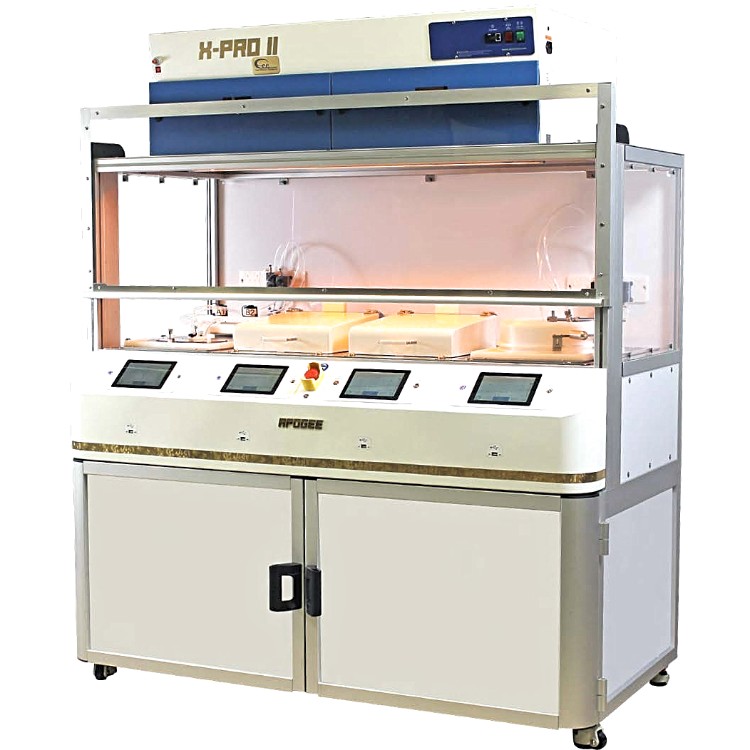
X-Pro II Workstation
- Full-size or half-size cabinet for coat, develop and bake modules
- Choice of ducted exhaust, fan filter unit (laminar downflow) or ductless recirculation top
- Installation and training arranged and quoted, delivered by our UK and European after-sales team
- Waste bottle containment with optional drain bottles
- Exhausted drawer for material storage and pressure vessels
- Sash for a clean environment, fume containment and operator safety
- CE marked