

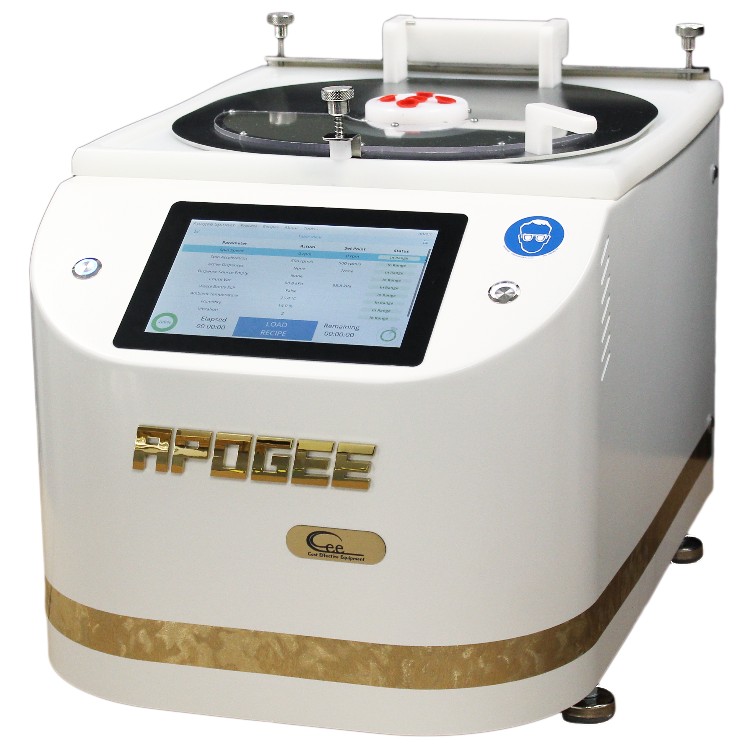
- Benchtop spin coater with a compact footprint
- Wafers up to 200 mm round and squares up to 6” x 6”
- Spin speed up to 12,000 rpm, repeatable to 0.2 rpm
- High-density polyethylene (HDPE) spin bowl
- Full-colour 7-inch touchscreen
- Benchtop, flange or deck mounting
- Fits the X-Pro II workstation
The spin chuck holds a wafer or other substrate on the spindle of a spin coater or spin developer while it turns, usually by vacuum. Spin chucks are also called wafer chucks or vacuum chucks, and choosing the right one is part of specifying the tool. A chuck that suits the substrate holds it flat and true at speed, and the wrong one leads to vacuum faults and uneven films. Cost Effective Equipment have designed more than 8,000 spin chucks for their Apogee spin coaters and developers, and SiSTEM supplies them across the UK and Europe, with a new tool or as additions to CEE tools you already run.
Circular vacuum chucks
Circular vacuum chucks are the standard choice for round wafers and pieces. CEE machine them from Delrin (acetal) for chemical compatibility, with their own vacuum groove layout and a face flat enough to run without wobble or vibration. For other chemistries they can be made in PVDF (Kynar), PTFE (Teflon), PEEK, stainless steel or anodised aluminium. Standard circular chucks are held in stock.
A circular chuck handles substrates up to about twice its own diameter, so the chuck size follows the substrate. For a square or irregular piece, go by its shortest side.
| Chuck diameter | Substrate size |
|---|---|
| 1/8″ (external O-ring) | 3 to 9.5 mm |
| 5/16″ (external O-ring) | 9 to 26 mm |
| 0.75″ | 25 to 38 mm |
| 1″ | 32 to 50 mm |
| 1.5″ | 45 to 77 mm |
| 2.25″ | 77 to 127 mm (3″ to 5″ wafers) |
| 4″ | 125 to 200 mm |
| 6.188″ | 200 to 300 mm |
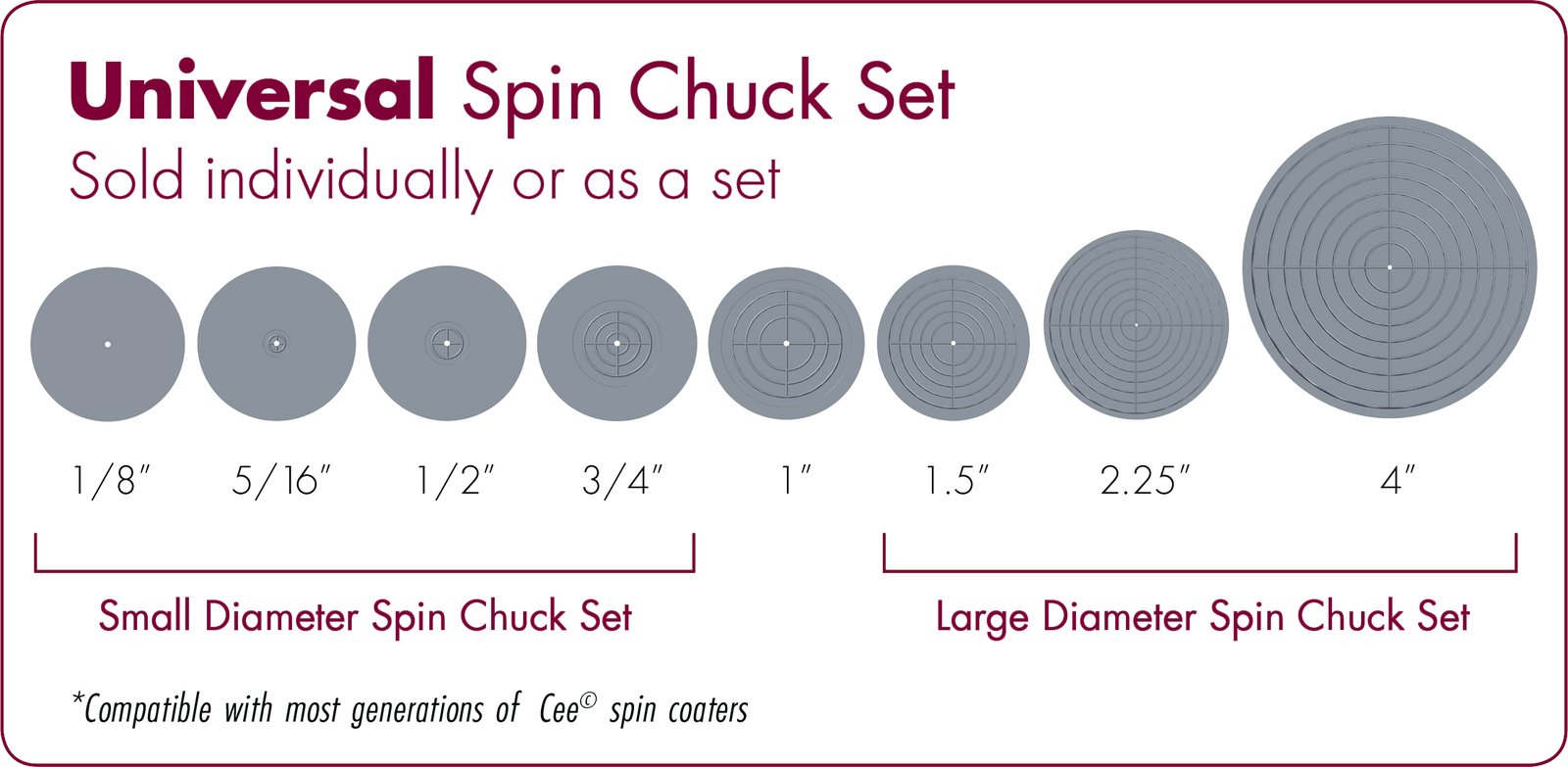
The two smallest chucks seal against the substrate with an external O-ring, and an O-ring can also be fitted to the 0.75″, 1″ and 1.5″ sizes. As wafers get larger, placing them on centre matters more, which is where a centering device comes in.
Spin chuck sets
A spin chuck set puts several sizes on one universal base, so moving from one substrate size to another is quick and one tool covers a wide range of work. Five chucks from 1/8″ to 1.5″ thread onto the base. The complete set adds solid 2.25″ and 4″ chucks, taking it from 3 mm pieces up to 200 mm wafers, and the small diameter set stops at 1.5″ for pieces and wafers up to 75 mm. Both come with spare O-rings and a storage case. The sets fit most generations of CEE spin coater, and we’ll check yours if you send us the model.
Porous ceramic chucks for thin wafers
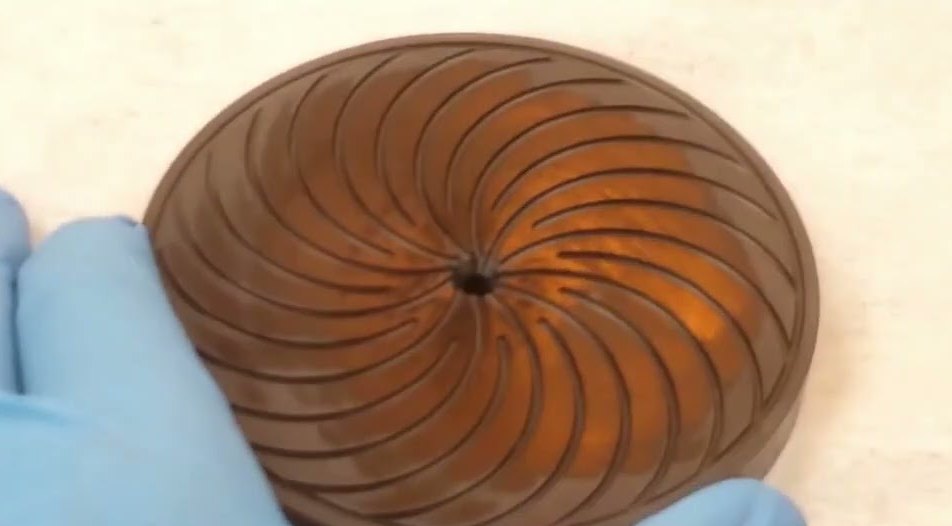
A porous chuck has a porous ceramic insert set into a recessed cavity. Vacuum spreads across the whole insert, so the substrate is supported evenly over its entire back face and isn’t pulled out of shape. That makes it the chuck for thinned wafers and foils. Full backside contact also reduces the risk of contaminating the back of the wafer, and the recess locates the substrate on centre. Each porous chuck is made to the dimensions of your substrate, in Delrin, PVDF, PTFE, PEEK, stainless steel or anodised aluminium.
Recessed chucks for squares, slides and photomasks
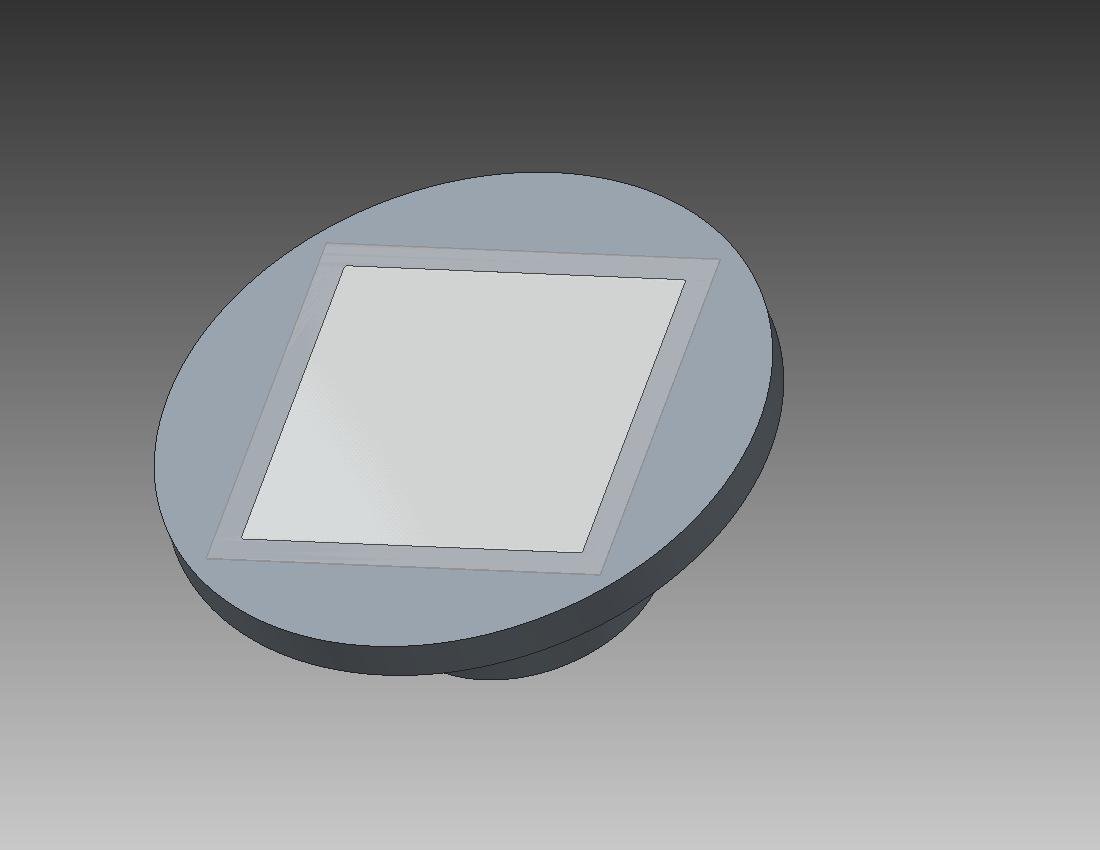
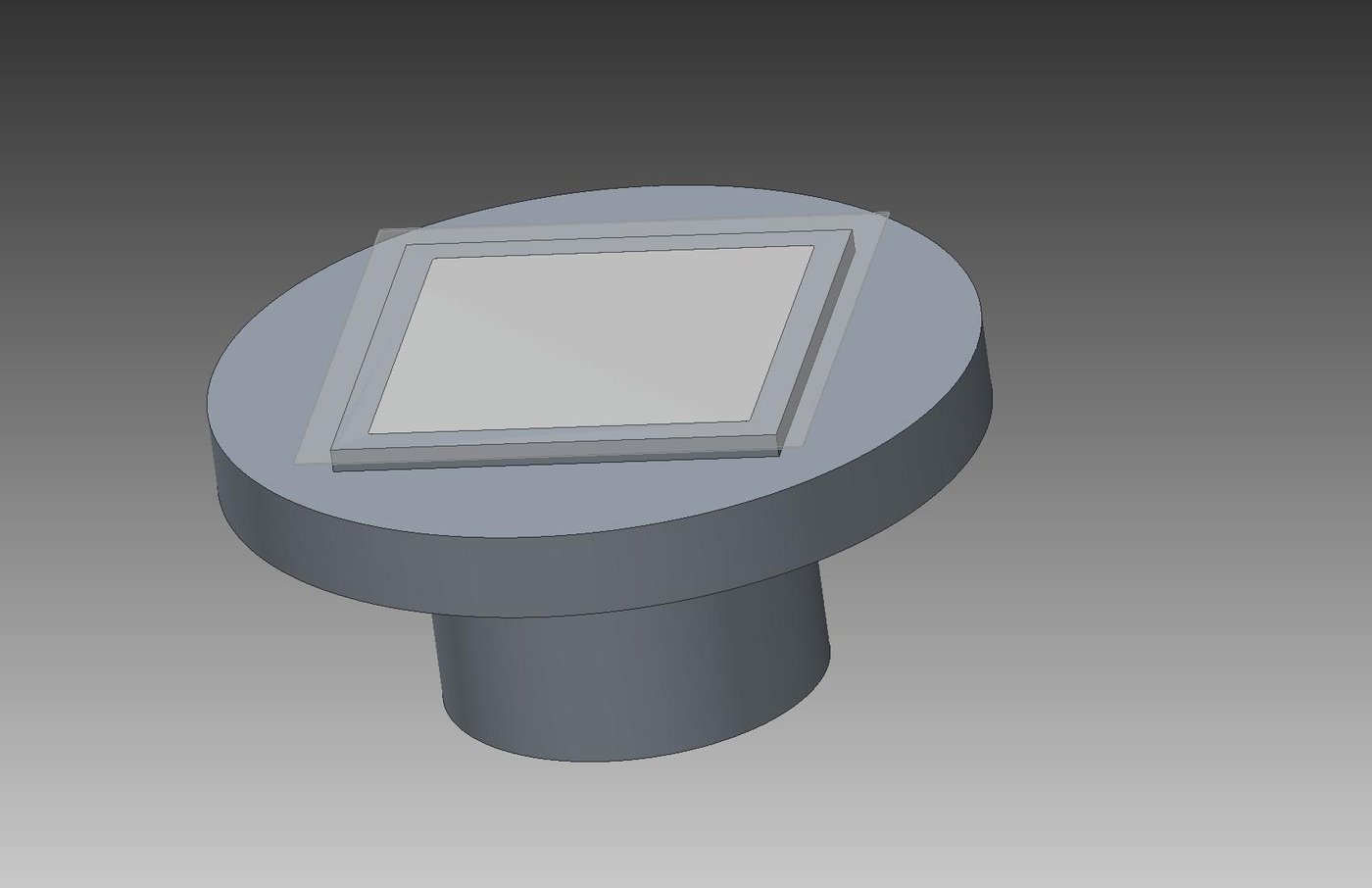
Squares and rectangles are harder to coat evenly than round wafers. Air turbulence at the corners makes the film dry unevenly, and material builds up along the edges and in the corners. A recessed chuck holds the part in a pocket machined to its exact size, level with the chuck surface, so the assembly spins much like a round wafer. Uniformity improves and the edge and corner build-up drops away. The pocket also centres the part without a centering device and supports its whole back face, and finger holes make it easy to lift out afterwards. Recessed chucks are made for each substrate, from microscope slides to photomasks, and CEE spin coaters take full 6″ x 6″ x 0.25″ photomask blanks this way.
Centering devices
A round wafer on a vacuum chuck needs to sit on centre, and the larger the wafer, the more an offset shows in the coating. Recessed, captive, film frame and porous chucks locate the substrate themselves. For circular vacuum chucks, CEE offer two centering devices.
Handheld centering devices are the lowest-cost option. Each one is made for a single wafer size and mates positively to the side of its chuck, so the wafer is on centre as soon as it’s placed against the device. They’re available for 2″ and 3″ wafers and for 100, 125, 150, 200 and 300 mm. Watch the handheld centering device video.
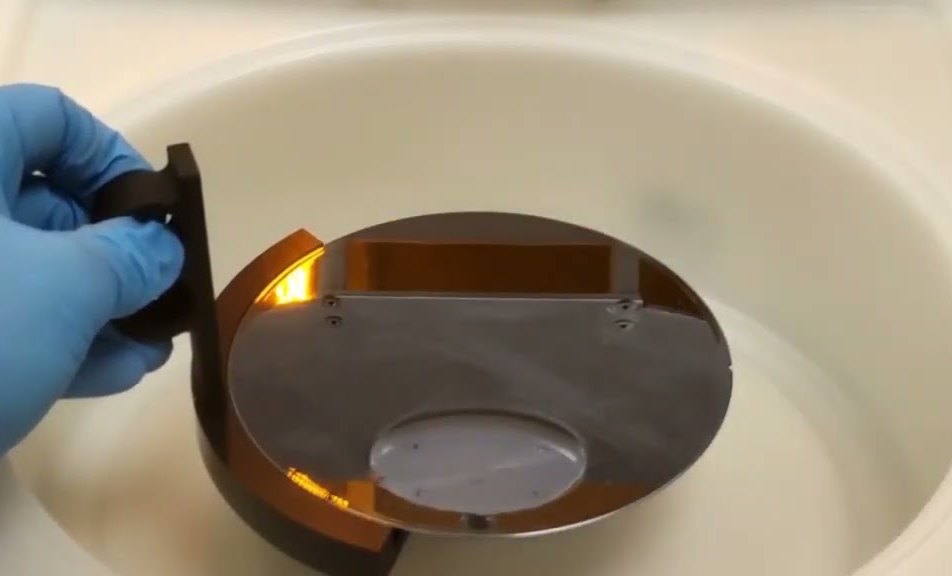
The flip-down centering device is a stainless steel arm mounted on the outer flange of the spin bowl. It rests upright, outside the bowl, until you swing it down to centre a wafer. Interchangeable fixtures cover wafers from 3″ to 200 mm and give two contact points on the wafer edge. The arm is quick to use and suits a production tool that runs one or two wafer sizes.
Captive, film frame and custom spin chucks
Captive chucks
A captive chuck holds the substrate between support pins that locate it and give it side support. The pins sit below the top of the substrate, so liquid flows off the edge freely. Captive chucks hold heavier and thicker substrates more securely than a standard vacuum chuck, and they’re used mainly for developing and cleaning. Like recessed chucks, each one is machined to fit your substrate and centres it as it goes on.
Film frame chucks
Thinned wafers are often mounted on tape in a film frame. A film frame chuck combines a porous insert, which supports the wafer across its back face, with vacuum O-rings and mechanical clamps that hold the frame. The clamps centre the frame as it’s loaded, and the even support avoids the deflection that concentrated vacuum can cause in a fragile wafer or coated film. Each film frame chuck is built for a specific substrate and frame, for coating or cleaning taped substrates.
Custom spin chucks
When none of the standard types fits, CEE’s in-house mechanical engineers modify an existing design or draw a new one. Perimeter vacuum chucks that hold a wafer by a ring near its edge, non-vacuum chucks and chucks carrying several substrates at once have all come about this way. To specify one, we’ll ask for the substrate dimensions and tolerances, its material, the tool it’s for, the chemicals you’ll use and what the process needs to achieve, such as a film thickness or a uniformity figure. If you’re using a film frame, we’ll need its type as well. A sample substrate helps CEE check the fit.
Spin chuck questions
Which chuck do I need for small pieces?
The 1/8″ and 5/16″ chucks, which seal with an external O-ring, take pieces from 3 mm to 26 mm. If you run a mix of piece and wafer sizes, a spin chuck set covers 3 mm to 200 mm on one base.
Will CEE chucks fit an older CEE spin coater?
Most generations of CEE spin coater take the current chucks. Send us the model and serial number and we’ll confirm with CEE before you order.
Which chuck material should I choose?
Delrin suits most solvent and aqueous processes and is the standard. PVDF, PTFE, PEEK, stainless steel and anodised aluminium are available where the chemistry calls for them, so tell us what you’ll be dispensing.
Can I use a vacuum chuck on a thinned wafer?
A thinned wafer can flex into the vacuum grooves of a standard chuck. A porous ceramic chuck supports it across the whole back face, and a film frame chuck does the same for wafers already taped to a frame.
How should I clean a spin chuck?
Wipe the chuck after each day’s use with a mild solvent such as IPA or acetone, taking it off the tool first so solvent doesn’t run into the vacuum system. Built-up material or a burr on the face can break the vacuum seal and cause vacuum errors, so check the face against a straight edge every few months.
Chucks built into lithography, etch, deposition and probe tools stay in place, and they are cleaned with chuck cleaning wafers that run through the tool like a production wafer.
Buying spin chucks through SiSTEM
We supply CEE spin chucks and centering devices with new Apogee spin coaters and spin developers, and as additions to CEE tools already in your lab. Standard circular chucks come from CEE’s stock, and custom, recessed, captive, film frame and porous chucks are made to order once CEE’s engineers have reviewed the substrate. Get a quote, or contact us with your substrate sizes and process and we’ll work out which chucks you need.
CEE spin coaters and developers
CEE spin chucks and centering devices fit these Apogee spin coaters and spin developers. We quote them with a new tool or on their own.
-
Apogee 200 Spin Coater
-
Apogee 450 Spin Coater
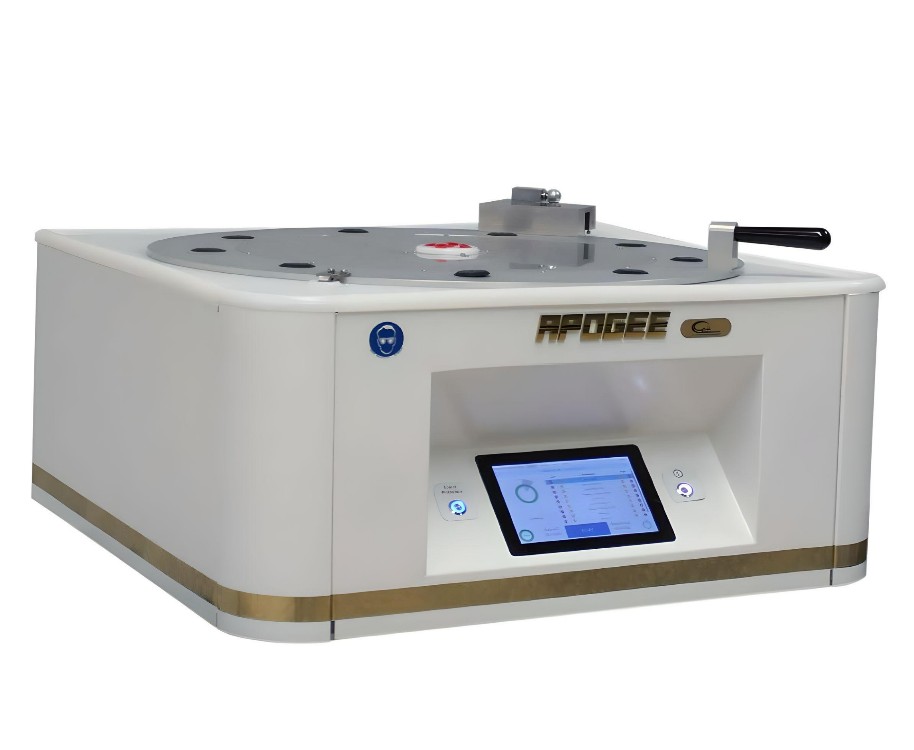
- Benchtop spin coater for large substrates
- Wafers up to 450 mm round and squares up to 14” x 14”
- Spin speed up to 6,000 rpm, repeatable to 0.2 rpm
- Indirect drive keeps the motor out of the chemical path
- Full-colour 7-inch touchscreen
- Benchtop, flange or deck mounting
- Fits the X-Pro II workstation
-
Apogee 200 Spin Developer
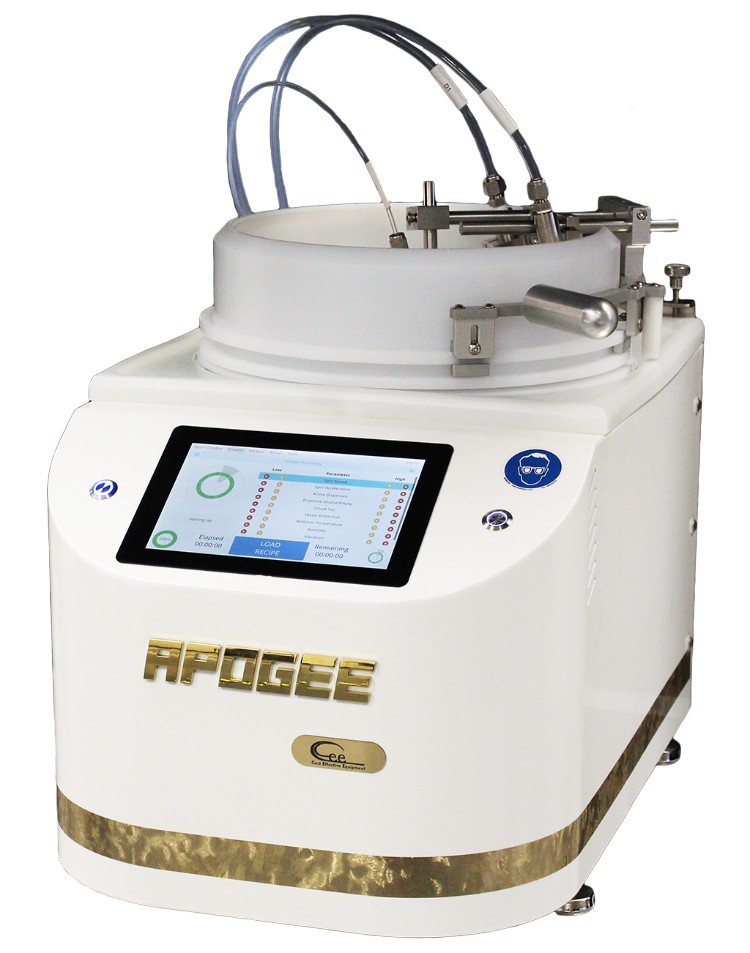
- Benchtop spin developer for wafers up to 200 mm and squares up to 6” x 6”
- Spray or stream developer dispense
- Top and backside DI water rinse
- Spin speed up to 12,000 rpm
- Optional nitrogen blow-off
- Fits the X-Pro II workstation
-
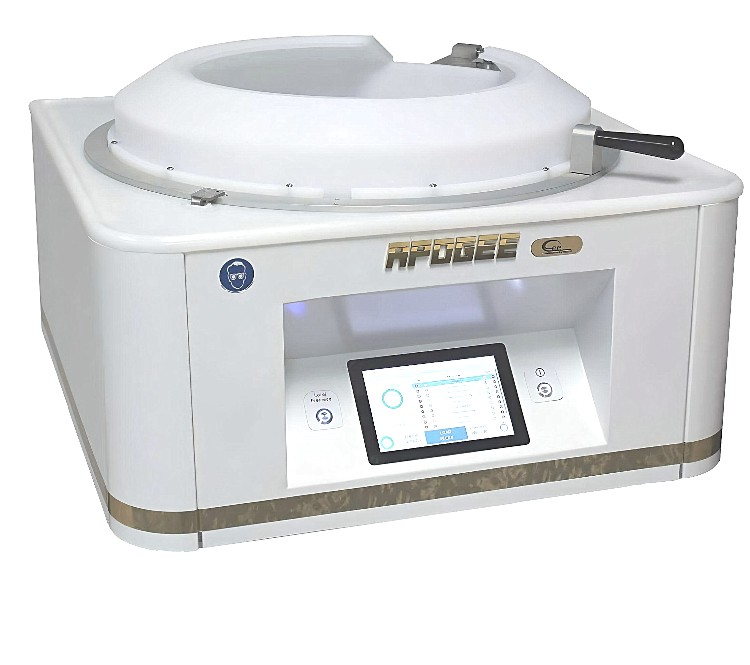
Apogee 450 Spin Developer
- Benchtop spin developer for wafers up to 450 mm and squares up to 14” x 14”
- Fanjet spray, side-angle puddle and stream dispense
- Up to four spray or stream nozzles
- Optional auto-drain separator
- Benchtop, flange or deck mounting
- Fits the X-Pro II workstation